
10 Major Divorce Mistakes to Avoid

Let’s cut to the chase. Unless you’re one of those magical “uncoupling” couples, chances are your divorce has your emotions running at full throttle, bouncing between anger, grief, fear, and resentment. Making rational decisions during your divorce can feel nearly impossible. But a divorce isn’t just ending a relationship. You’re also dividing your marital empire. That means splitting assets, debts, your home, retirement accounts, and more. Make the right choices, and you can set yourself on a path toward recovery and renewal. Make the wrong ones, and you may find yourself trapped in financial hardship or endless conflict with your ex.
That’s why understanding divorce mistakes to avoid is so critical. While every divorce is unique, certain missteps are surprisingly common (and surprisingly costly). In this article, we’ll explore 10 major divorce mistakes and, more importantly, how you can avoid them.
1. Making Decisions Based on Emotion
Divorce triggers some of the most intense emotions you’ll ever experience. Feelings of anger, betrayal, sadness, fear, and even relief are all completely normal. However, if you let these emotions take the wheel during your divorce negotiations, they’re bound to drive you off the road.
Common emotion-based pitfalls include:
- Fighting for the family home out of spite, even when you can’t afford the mortgage on a single income
- Refusing a reasonable settlement offer in order to “punish” your spouse
- Demanding full custody of the kids to hurt your ex, even though it’s not in their best interest
- Spending thousands on legal fees to fight over things you don’t really care about
- Making impulsive decisions like draining joint accounts or running up credit card debt
These choices can cost you financially, damage your credibility with a family court judge, and prolong your already painful divorce process.
So, how do you stay rational when everything feels personal? Start by giving yourself time before responding to any proposal or making major decisions. Consult with your attorney, therapist, or financial planner, and focus on your long-term goals rather than short-term satisfaction.
2. Not Hiring a Divorce Lawyer

Hesitating to hire a divorce attorney? That’s understandable. The average divorce lawyer charges $270 an hour, which means their bill can add up quickly. And, truthfully, not every divorce requires an attorney.
If your divorce was short, you have no children, your assets are minimal, and you and your ex can agree on a fair divorce settlement, then you may not need professional legal help. However, most divorces aren’t simple and conflict-free.
It’s usually a good idea to hire a divorce lawyer when:
- You have children and need to establish fair custody and child support arrangements
- You own property, retirement accounts, and significant assets
- One spouse earns considerably more than the other
- You suspect your spouse may be hiding assets or being dishonest about their finances
- Your spouse has hired an attorney
- You aren’t able to agree on multiple aspects of your divorce settlement
The problem is that while you may be hesitant to hire a lawyer, your spouse could already be working with one and putting a strategic plan into motion. An experienced divorce attorney will help you understand your rights, identify your marital assets, and protect you from making costly mistakes.
3. Not Gathering All Your Financial Documents
One thing you’ll learn early in the divorce process is that you’ll need to pull together lots, and lots, and LOTS of documents. The process can feel daunting, and it’s easy to overlook hard-to-find documents or skip them entirely. Big mistake.
It’s critical that you have a complete picture of your finances. Without all your financial documents, you can’t negotiate for a fair divorce settlement. Or worse, you might discover that your ex was hiding assets or debt after your divorce is finalized.
Here’s a quick list of the most common documents you’ll need to gather:
- Bank statements
- Investment accounts
- Retirement plans
- Tax returns
- Credit card statements
- Mortgage documents
- Business records
- Life insurance policies
- Stock options
- Credit reports
Your attorney and financial adviser can also help you figure out what other documents you may need to find.
4. Ignoring the Tax Implications of Divorce
Divorce changes your life in many ways, including your tax return. Yet, many people rush through settlement negotiations without considering how their decisions will impact their taxes for years to come.
The tax implications of divorce are far-reaching. First, your filing status will change. If you keep the family home, you’ll be on the hook for property taxes and potential capital gains when you sell. Retirement accounts have their own tax consequences if you choose to withdraw money from them. If you end up paying alimony (or spousal support), you’ll still need to pay taxes on that money. You’ll also need to negotiate with your partner about which one of you will claim your children as dependents.
Even the timing of your divorce matters. If you finalize your divorce before the end of the year (even on Dec 31st), you’ll be considered divorced for the entire year when it comes to your taxes.
Before you agree to your divorce settlement, consult with a tax professional or financial advisor.
5. Mishandling Retirement Accounts and QDROs
If you’re getting divorced after a long marriage, your retirement accounts could be a major asset to negotiate. Yet, many couples don’t give them the attention they deserve. The complexity of dividing these accounts can often lead to mistakes that can jeopardize your future financial security.
If you decide to divide your employer-sponsored retirement account or your spouse’s account, like 401(k)s and pensions, you’ll need a Qualified Domestic Relations Order to avoid taxes or early withdrawal penalties. Many people don’t realize that they need this legal document or assume they can handle it after the divorce is finalized.
This delay can be dangerous. If your ex drains the account, dies, or remarries before the QDRO is executed, you could lose your share of the assets.
Different retirement accounts, from IRA s to pensions and government retirement plans, require different approaches. Don’t wait until after your divorce to figure out the finer details.
6. Not Creating a Realistic Post-Divorce Budget
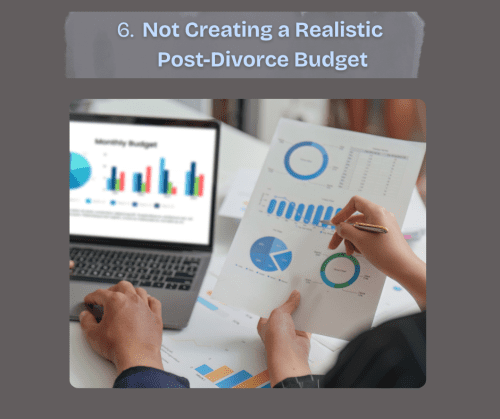
One of the harshest realities of divorce is the dramatic shift you’re likely to face in your finances. Going from two incomes to one is a challenge many people underestimate. Women are especially likely to struggle financially after divorce.
A study published in The Journals of Gerontology found that women experienced a 45% decline in their standard of living after divorce, while men’s dropped by 21%. These aren’t small adjustments.
Many people rush through divorce negotiations while underestimating housing costs, utilities, insurance premiums, healthcare expenses, and everyday living costs. Parents may also not fully account for the expenses of raising their children across two separate households (if both parents share custody).
Before you agree to any settlement terms, sit down and create a realistic budget for your post-divorce life. Include everything:
- Rent
- Mortgage
- Utilities
- Groceries
- Transportation
- Insurance
- Childcare
- Debt payments
- Spousal support
- Child support
- Discretionary spending
A financial advisor, such as a Certified Divorce Financial Planner, can be a huge help in this area.
7. Fighting Over Everything Instead of Prioritizing
With your emotions running high during your divorce, you might feel tempted to fight over everything, from the furniture to the dishes, lawn mower, and every last possession in the house. While you may truly want your fair share, this scorched-earth approach will cost you far more than you’ll gain.
If you end up fighting it out with your ex in court, your legal fees will add up quickly. Your attorney will charge you for every email, phone call, and court appearance. Spending two hours of attorney time fighting over a $200 coffee table just doesn’t make financial sense.
As part of your divorce strategy, perform an honest cost-benefit analysis. Focus your energy and resources on what truly matters to you. That will likely be your home, retirement accounts, child custody arrangements, and ongoing support payments.
Be willing to compromise on smaller items and issues so you can fight for the things that truly matter.
8. Hiding Assets
Considering hiding some assets from your spouse? Maybe you think you won’t get caught, or you suspect your spouse is doing the same thing. Regardless of your reasoning, hiding assets is never worth the risk.
You have a legal obligation to fully disclose all your assets and debts during your divorce. When a spouse tries to hide assets, the courts take it very seriously. The consequences can be severe. If you’re caught, the judge may award your spouse 100% of the concealed property or money. You could also be ordered to pay your ex’s attorney fees and court costs. In extreme cases, you may face criminal charges for perjury.
Even sophisticated hiding tactics leave digital trails that forensic accountants can uncover. When it comes to hiding assets, just don’t do it.
9. Poor Communication

No matter how you feel about your spouse, your divorce experience will be much better (and cheaper) if you’re both willing to communicate respectfully with each other. Poor communication during a divorce will prolong the process, making it more painful and expensive for everyone involved.
Common communication mistakes include refusing to speak with your spouse or responding impulsively with angry texts or emails (which can later be used against you in court).
You also need to communicate clearly with your legal team so they can represent you effectively. Make sure your divorce lawyer understands your situation and priorities.
If you can maintain civil communication with your spouse, do so. Couples who can discuss issues directly often reach settlements faster and spend less on legal fees. If you’re struggling to talk to your spouse directly, establish a clear intermediary, such as your lawyer.
10. Accepting a One-Sided Settlement Agreement
The divorce process is exhausting. You want it over. You want peace. You may be willing to agree to almost anything if it means ending the conflict and starting your new life.
This is exactly when you’re most vulnerable to accepting an unfair settlement.
One-sided divorce settlements happen when one spouse is desperate to finish the process quickly, and the other takes advantage of that urgency. You might agree to less child support than you need, give up your share of retirement accounts, or accept an unfair division of assets simply because you can’t bear another month of negotiations.
The problem is that you’ll live with the results of your settlement for the rest of your life. What feels like relief today can quickly turn into regret tomorrow.
Before you sign your divorce settlement, take the time to review it carefully with your attorney. Make sure you understand every provision and its long-term implications. Compromise is necessary in every divorce, but capitulation isn’t.
Don’t trade your financial future for temporary relief today.
Create a Better Divorce Experience
The decisions you make during your divorce will shape your financial security, living situation, and overall well-being for years to come. While emotions may be running high, work to avoid the common divorce mistakes discussed in this article. It could mean the difference between starting your next chapter on a high note or facing hardships in your post-divorce life.
The key themes throughout these mistakes are clear:
- Don’t rush
- Gather complete information
- Understand the full implications of your decisions
- Surround yourself with qualified professionals
Education is your most powerful tool during divorce. Understand your rights, your options, and the potential pitfalls so you can make informed decisions. That’s where Second Saturday comes in. Our divorce workshops bring together experienced legal, financial, and emotional health professionals who provide attendees with non-judgmental guidance on navigating the divorce process.
Don’t face your divorce alone. Find a Second Saturday Divorce Workshop near you.
Common Divorce Mistake FAQs
What’s the biggest mistake people make during a divorce?
The biggest divorce mistake is making decisions based on emotions rather than logic. Acting out of anger, hurt, or revenge often leads to poor financial choices and prolonged legal battles. Fighting for assets out of spite, refusing reasonable settlements, or making impulsive decisions can cost you significantly.
Do I really need a lawyer for my divorce?
Not every divorce requires a lawyer, but many benefit from legal representation. You likely need an attorney if you have children, own property or retirement accounts, earn significantly different incomes from your spouse, suspect your spouse is hiding assets, or if your spouse has already hired a lawyer. An experienced divorce lawyer protects your rights and helps you avoid costly divorce mistakes.
What is a QDRO and why is it important?
A Qualified Domestic Relations Order (QDRO) is a legal document required to divide employer-sponsored retirement plans, like 401(k)s and pensions, during divorce without triggering taxes or penalties. Without a properly executed QDRO, you could lose your share of retirement benefits entirely. QDROs should be handled during the divorce process, not after it’s finalized.
How much will my standard of living drop after divorce?
Research shows women experience approximately a 45% decline in their standard of living after divorce, while men experience about a 21% drop. Both genders see roughly 50% decreases in wealth. These dramatic changes make creating a realistic post-divorce budget essential. Understanding your true financial needs helps you negotiate fair support payments and property division.
Can I hide assets during my divorce?
No. Hiding assets during divorce is illegal and carries severe consequences if you’re caught. You have a legal obligation to fully disclose all assets and debts. If caught concealing property, you could lose 100% of the hidden assets, be forced to pay your spouse’s attorney fees, face court sanctions, or even criminal perjury charges. Forensic accountants can trace hidden assets, making honest disclosure always the best policy.