
10 Mindfulness Techniques for Managing Divorce Stress

If you’re going through a divorce, you already know how overwhelming it can feel. The constant worry, sleepless nights, and emotional exhaustion aren’t just in your head. Divorce is genuinely one of life’s most stressful experiences. In fact, the Holmes and Rahe Stress Inventory ranks divorce as the second most stressful life event with an impact score of 73 out of 100.
Understanding that divorce stress is both normal and scientifically recognized can be validating, but it doesn’t make the experience any easier. The good news? There are proven ways to manage stress during divorce that can help you navigate this challenging time with greater resilience and peace of mind.
In this article, we’ll walk you through 10 specific mindfulness techniques that can provide immediate relief when you need it most. You don’t have to suffer through divorce stress alone.
Why Divorce Is So Stressful
The stress of divorce isn’t just about ending a relationship. You’re also simultaneously managing multiple life-changing situations. You might be finding a new place to live, adjusting to a different financial reality, navigating complex legal processes, and potentially restructuring your entire parenting routine.
Your daily life, which once felt predictable, suddenly becomes uncertain. Simple decisions, like where to spend holidays or who picks up the kids from school, now require negotiation and planning. The emotional toll is equally intense. You’re grieving the loss of your marriage while trying to make practical decisions about your future.
It’s no wonder that managing divorce stress feels overwhelming!
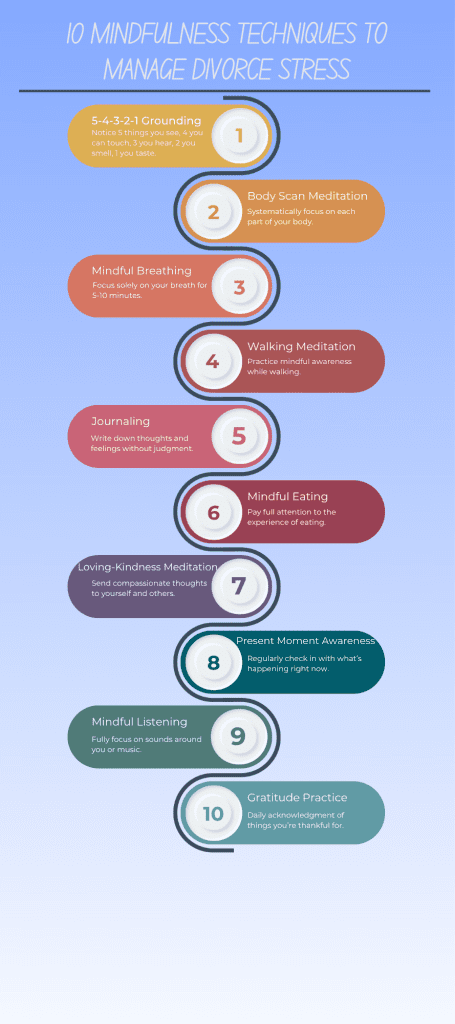
10 Mindfulness Techniques to Help Manage Divorce Stress
Mindfulness is the practice of bringing your attention to the present moment without judgment. It’s particularly powerful for managing stress from divorce because it helps interrupt the cycle of anxious thoughts and gives your nervous system a chance to calm down.
You can use these mindfulness techniques anytime divorce stress symptoms start to overwhelm you. Whether you’re sitting in your lawyer’s office feeling anxious, lying awake at 3 AM worrying about the future, or feeling triggered during a difficult conversation, these tools can help you find your center again.
When you begin practicing a mindfulness technique, start with just a few minutes at a time. Even 30 seconds of mindful breathing can shift your nervous system from fight-or-flight mode into a calmer state. As you practice regularly, you’ll find it easier to access these techniques when you need them most.
Below are 10 tried-and-true mindfulness practices for managing stress during divorce. As you read through the list, notice which ones resonate with you. You don’t have to try them all at once. Start with the techniques that feel the most appealing. Don’t worry about perfecting them. The goal is simply to find what works for your unique situation and stress patterns.
1. The 5-4-3-2-1 Grounding Technique
This powerful grounding exercise is perfect when divorce stress symptoms like anxiety or panic start to take over. It works by bringing your attention to your immediate physical environment, pulling you out of worried thoughts about the past or future.
How to Do It
Start by taking a deep breath, then identify five things you can see around you. Maybe it’s the texture of the wall, a book on the shelf, or the way light falls across your desk.
Next, notice four things you can physically touch or feel, like your feet on the floor, the temperature of the air, the fabric of your clothes, or the smooth surface of your phone.
Then tune into three things you can hear, perhaps traffic outside, the hum of your refrigerator, or birds chirping.
Continue with two things you can smell, like coffee brewing, fresh air, or even just the scent of your surroundings. Finally, identify one thing you can taste, such as the lingering taste of your morning coffee or simply the neutral taste in your mouth.
This technique is especially helpful during high-stress moments, like court appearances, difficult phone calls with your ex, or when you’re feeling overwhelmed by paperwork and decisions.
2. Body Scan Meditation

Managing divorce stress often comes down to reconnecting with your body, which tends to hold tension and stress in ways we don’t always notice. A body scan meditation helps you identify where you’re carrying stress and consciously release it.
How to Do It
Find a comfortable position, either lying down or sitting with your back supported. Close your eyes or soften your gaze downward. Starting at the top of your head, slowly move your attention through each part of your body. Notice your forehead. Is it tense or relaxed? Move to your jaw, neck, and shoulders. Often during divorce, we carry enormous tension in our shoulders and neck from the constant stress.
Continue down through your arms, chest, and stomach. Don’t try to change anything you notice. Simply observe. When you reach areas of tension, breathe into them and imagine the stress melting away with each exhale. Move through your hips, thighs, knees, calves, and feet.
This practice is particularly helpful before bed when divorce-related worries might keep you awake, or first thing in the morning to start your day with awareness and calm.
3. Mindful Breathing
Your breath is always with you, making it the most accessible tool for managing stress during divorce. When we’re stressed, our breathing becomes shallow and rapid. Mindful breathing helps reset your nervous system and can offer immediate relief.
How to Do It
Try the 4-7-8 breathing technique: Inhale quietly through your nose for four counts, hold your breath for seven counts, then exhale completely through your mouth for eight counts. This pattern activates your parasympathetic nervous system, which is responsible for the body’s rest and digest response.
Alternatively, you can also try box breathing. Inhale for four counts, hold for four, exhale for four, and hold empty for four. Repeat this pattern for several minutes.
You can practice mindful breathing anywhere – in your car before a meeting with your attorney, while waiting for your kids to come out of school, or during a brief break in your workday. Even three mindful breaths can help shift your state when divorce stress feels overwhelming.
4. Walking Meditation

Sometimes, sitting still feels impossible when you’re dealing with the stress of divorce. Walking meditation combines the benefits of gentle movement with mindfulness practice, making it a good option for those times when you’re filled with restless energy or when you need to process emotions.
How to Do It
Choose a quiet path, whether it’s around your block, in a park, or even just back and forth in your living room. Begin walking at a slower pace than usual, focusing on the sensation of your feet touching the ground. Feel the weight shifting from one foot to the other, the movement of your legs, and the swing of your arms.
When your mind starts racing with divorce-related worries, gently guide your attention back to the physical sensations of walking. Notice your surroundings – the trees, sky, sounds, and smells – without getting lost in thought.
Walking meditation is especially helpful when you’re feeling stuck or overwhelmed by decisions. The gentle movement often helps solutions emerge naturally, and you’ll return from your walk feeling more centered and clear.
5. Mindful Journaling
Divorce can bring up a whirlwind of emotions, and journaling provides a safe space to process them without judgment. Unlike regular journaling, mindful journaling involves writing with full presence and awareness.
How to Do It
Set aside 10-15 minutes when you won’t be interrupted. Begin by taking a few deep breaths and setting an intention to write without censoring yourself. You might start with a prompt like “Right now I’m feeling…” or “What I need most today is…” Write continuously without worrying about grammar, spelling, or making sense.
If you notice your inner critic trying to judge what you’re writing, acknowledge it and return to simply observing and recording your thoughts and feelings. Sometimes you might write about practical concerns, like custody arrangements or finances; other times about deeper emotions like grief, anger, or hope for the future.
Mindful journaling helps you become aware of patterns in your thinking and emotional responses, which is the first step in managing divorce stress more effectively.
6. Mindful Eating

During divorce, it’s common for your eating habits to become chaotic. You might skip meals when stressed, eat mindlessly while distracted, or turn to comfort foods. Mindful eating helps you reconnect with your body’s needs and can be surprisingly soothing.
How to Do It
Choose one meal or snack each day to eat mindfully. Before you begin eating, take a moment to appreciate your food – its colors, textures, and aroma. Take smaller bites than usual and chew slowly, paying attention to the flavors and how the food feels in your mouth.
Notice when you’re actually hungry versus eating for emotional reasons. This isn’t about judgment. It’s about awareness. If you realize you’re eating because you’re sad or anxious about your divorce, that’s valuable information. You might choose to continue eating for comfort, and that’s okay, but you’re doing it consciously.
Mindful eating can help regulate your nervous system and ensure you’re nourishing yourself properly during this stressful time.
7. Loving-Kindness Meditation
Divorce often brings up difficult feelings toward your ex-spouse, yourself, and even others involved in the process. Loving-kindness meditation helps soften these harsh emotions and cultivate compassion, which can reduce the emotional burden you’re carrying.
How to Do It
Start by extending loving wishes to yourself: “May I be happy, may I be healthy, may I be at peace, may I be free from suffering.” Really mean it. You deserve kindness, especially from yourself. Then extend these wishes to someone you love easily, like a close friend or your children.
Next, bring to mind a neutral person, maybe someone you barely know. Send them the same loving wishes. When you’re ready, and only if it feels right, you might extend these wishes to your ex-spouse. This doesn’t mean you condone harmful behavior or want to reconcile. It’s about freeing yourself from the burden of anger and resentment.
This practice can be challenging during divorce, so go slowly and be patient with yourself. Even if you can only genuinely offer loving-kindness to yourself, that’s enough.
8. Present Moment Awareness
A lot of divorce stress comes from worrying about the future or ruminating about the past. Present moment awareness helps you anchor yourself in the here and now, where you actually have some control.
How to Do It
Throughout your day, set gentle reminders to check in with the present moment. You might set your phone to buzz every hour with a reminder to pause and notice: What am I thinking right now? What am I feeling in my body? What do I see, hear, or smell around me?
When you catch your mind spinning with worry about custody hearings, financial settlements, or how your life will look post-divorce, gently ask yourself: “What is actually happening right now?” Often, in this very moment, you’re safe and okay.
This practice helps you realize that while you can’t control everything about your divorce, you can control where you place your attention. And right now, in this moment, you have everything you need to take the next small step forward.
9. Mindful Listening

Whether you’re listening to music, nature sounds, or simply the ambient noise around you, mindful listening can provide a break from the constant mental chatter that comes with managing divorce stress.
How to Do It
Choose something pleasant to listen to. It might be your favorite calming music, sounds of rain or ocean waves, or even just the sounds in your environment. Close your eyes or soften your gaze, and focus entirely on what you’re hearing. Notice the different layers of sound, the rhythm, the volume changes, and how the sounds make you feel.
When thoughts about your divorce arise, acknowledge them and then gently return your attention to listening. This practice helps train your mind to focus on one thing at a time rather than being pulled in multiple directions by worry and stress.
Mindful listening is particularly helpful when you’re feeling overwhelmed by the amount of information and decisions involved in divorce proceedings.
10. Gratitude Practice
When you’re going through a divorce, offering gratitude might feel impossible or even insulting to your pain. However, a gentle gratitude practice isn’t about pretending everything is fine. It’s about noticing that even in difficult times, there are still small things that continue to support and sustain you.
How to Do It
Each day, try to identify three things you’re grateful for. They don’t have to be big. Maybe it’s your morning coffee, a text from a friend, or the fact that you got through a difficult conversation. Some days, you might be grateful for your own resilience or for the support of your legal team.
You might also practice gratitude for lessons you’re learning or strengths you’re discovering in yourself through this challenging time. Many people find that divorce, while painful, teaches them about their own capabilities.
Keep a gratitude journal or simply make mental notes. This practice helps balance your perspective when divorce stress threatens to overwhelm you with everything that’s going wrong.
Professional Help and Resources for Divorce Stress
While mindfulness techniques are powerful tools for managing divorce stress, sometimes you need additional support. If you’re experiencing persistent anxiety or depression, professional help can make a significant difference.
Consider reaching out to a mental health professional if you’re experiencing any of these common symptoms of divorce stress:
- Trouble sleeping
- Feeling hopeless
- Experiencing panic attacks
- Hearing concerns from friends or family members
Therapists who specialize in divorce and life transitions can give you coping and healing strategies for your specific situation. Also, don’t overlook how working with experienced divorce professionals, like attorneys, financial advisors, and mediators, can also reduce your stress by helping guide you through your divorce options.
Take Control of Your Divorce Stress

Learning how to manage stress during divorce doesn’t happen overnight, but the mindfulness techniques we’ve shared can provide relief when you need it most. These practices help you stay grounded in the present moment, reduce anxiety, and help you build resilience during one of life’s most challenging transitions.
Just remember that while mindfulness is incredibly powerful for managing stress from divorce, it’s not a substitute for professional mental health support when you need it. If your divorce stress symptoms persist or worsen, consider reaching out to a professional therapist.
Another way to reduce your divorce stress is through educating yourself about divorce and preparing for the process. This is where Second Saturday Divorce Workshops can be a game-changer. Our workshops connect you with local divorce professionals, like attorneys, financial advisors, therapists, and other specialists, who can give you practical knowledge and a clearer roadmap for your divorce.
Find your nearest Second Saturday Divorce Workshop.